
Introduction
In today’s digital world, data is more valuable than ever. Whether it’s personal photos, financial records, or sensitive work documents, keeping your data safe is crucial. Cyberattacks, hacking, and accidental loss are constant threats. That’s why using the right tools to protect your data is essential for everyone, from beginners to advanced users. These tools help secure your files, passwords, devices, and online activities, ensuring your information remains private and safe.
Protecting data is not just for tech experts—it’s for anyone who uses the internet. Simple actions like using strong passwords, backing up files, and encrypting sensitive data can prevent major losses. Moreover, with the rise of ransomware and phishing attacks, relying on outdated security methods is risky. By integrating reliable tools into your daily digital routine, you can safeguard your data efficiently.
In this guide, we’ll cover everything about tools to protect your data, including what they are, why they are important, how to use them effectively, and tips to maximize their protection. By the end, you will have a clear understanding of the best ways to keep your digital life secure and reduce risks of data theft or loss.
What is Tools to Protect Your Data?
Tools to protect your data are software applications, devices, or methods designed to secure your digital information. They help prevent unauthorized access, data loss, or cyber threats. These tools can range from password managers and antivirus software to cloud backups and encryption tools.
Some key examples include:
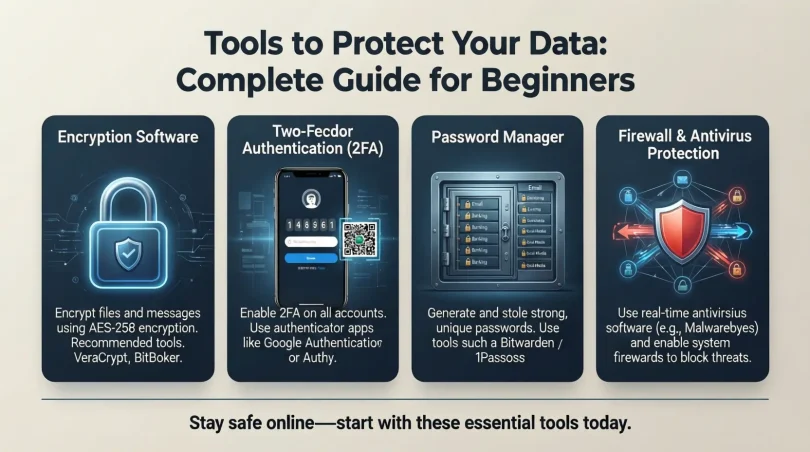
- Antivirus and anti-malware software – Protects your devices from viruses, malware, and spyware.
- Encryption tools – Scrambles data so only authorized users can read it.
- Password managers – Stores and generates strong passwords to prevent account breaches.
- VPNs (Virtual Private Networks) – Secures your internet connection and hides your IP address.
- Backup solutions – Automatically save copies of your files in safe locations.
In simple terms, these tools act like digital shields, keeping your personal and professional data away from hackers, cybercriminals, or accidental loss. Using these tools consistently ensures that even if your device is compromised, your important information remains protected.
Why is Tools to Protect Your Data Important?
Protecting data is no longer optional—it’s a necessity. Every day, cyberattacks target individuals and businesses alike. Here’s why tools to protect your data are essential:
- Prevent Identity Theft: Hackers can steal personal information such as social security numbers, banking details, and passwords. With proper protection, you reduce the risk of identity theft.
- Safeguard Financial Information: Online banking and e-commerce transactions can be vulnerable. Security tools ensure your financial data remains confidential.
- Protect Sensitive Work Data: Businesses store client data, project files, and confidential documents digitally. Losing or leaking these files can have serious consequences.
- Avoid Ransomware and Malware: Malware can lock or delete files. Data protection tools minimize these risks.
- Peace of Mind: Knowing that your data is secure allows you to focus on work, studies, or personal projects without constant worry.
In short, using these tools reduces risks, protects privacy, and ensures that your digital life remains safe and organized.
Detailed Step-by-Step Guide to Protect Your Data
Here’s a practical, step-by-step guide to using tools to protect your data effectively.
Step 1: Use Strong Passwords
Weak passwords are the easiest way for hackers to access your accounts. Follow these tips:
- Use a combination of uppercase, lowercase, numbers, and symbols.
- Avoid common words or predictable sequences.
- Use a password manager to store and generate complex passwords.
Step 2: Enable Two-Factor Authentication (2FA)
Two-factor authentication adds an extra layer of security:
- It requires a second verification method, such as a text message code or authentication app.
- Even if your password is stolen, 2FA prevents unauthorized access.
Step 3: Install Antivirus and Anti-Malware Software
Antivirus software protects against viruses, malware, and spyware:
- Choose trusted brands with real-time protection.
- Regularly update the software to guard against new threats.
Step 4: Use Encryption Tools
Encryption keeps data unreadable without a decryption key:
- Encrypt sensitive files before storing or sending them online.
- Many tools allow folder-level encryption for personal and professional use.
Step 5: Backup Your Data
Data loss can happen due to hardware failure or accidental deletion:
- Use external drives or cloud backup services.
- Schedule automatic backups for convenience.
Step 6: Use a Virtual Private Network (VPN)
A VPN secures your internet connection:
- Encrypts online activity, hiding it from hackers or ISPs.
- Ideal when using public Wi-Fi networks.
Step 7: Keep Software Updated
Outdated software can have security vulnerabilities:
- Regularly update operating systems, apps, and browsers.
- Turn on automatic updates to stay protected effortlessly.
Step 8: Limit Data Sharing
Be mindful of what you share online:
- Avoid oversharing on social media.
- Review app permissions and remove unnecessary access.
Step 9: Monitor Your Accounts
Regularly check accounts for suspicious activity:
- Look for unauthorized logins or transactions.
- Set up alerts for unusual activities where possible.
By following these steps, you can build a strong defense using multiple tools to protect your data.
Benefits of Tools to Protect Your Data
Using these tools offers many advantages:
- Enhanced Security – Reduces the risk of hacking and data breaches.
- Data Privacy – Keeps personal and financial information confidential.
- Easy Recovery – Backups ensure data can be restored if lost.
- Protection on Public Wi-Fi – VPNs prevent eavesdropping.
- Time-Saving – Password managers and automated backups simplify digital management.
- Peace of Mind – Confidence knowing your data is safe.
These benefits make investing in reliable security tools a wise decision for everyone.
Disadvantages / Risks
While tools to protect your data are vital, some limitations exist:
- Cost – Premium software or cloud backups can be expensive.
- Complexity – Beginners may find advanced tools challenging to set up.
- False Sense of Security – No tool guarantees 100% protection; user vigilance is still needed.
- Performance Impact – Some security software may slow down devices.
- Dependency – Relying solely on software without good habits can still risk data loss.
Understanding these risks ensures you use tools wisely and complement them with safe digital practices.
Common Mistakes to Avoid
Avoiding these mistakes can maximize your data protection:
- Using Weak or Repeated Passwords – Make every account unique and strong.
- Ignoring Software Updates – Updates fix security vulnerabilities.
- Skipping Backups – Without backups, recovery from data loss is impossible.
- Downloading Suspicious Files – Always verify sources before downloading.
- Neglecting Two-Factor Authentication – Adds critical extra security.
- Sharing Too Much Personal Information – Oversharing online increases risk.
- Not Monitoring Accounts – Early detection of unusual activity prevents serious damage.
Correcting these mistakes ensures that your tools to protect your data work effectively.
FAQs
1. What is the best tool to protect my data?
There isn’t one “best” tool; protection works best as a combination: antivirus software, password manager, VPN, encryption, and backups together offer comprehensive security.
2. Are free tools enough to protect my data?
Free tools can provide basic protection, but premium options often offer stronger security, automatic updates, and more features.
3. How often should I backup my data?
Ideally, backups should be automatic and frequent—daily or weekly—depending on how often you update your files.
4. Can my data still be hacked if I use these tools?
While these tools greatly reduce risk, no system is 100% foolproof. User vigilance is crucial alongside these protections.
5. What is the easiest way to remember strong passwords?
Use a password manager. It stores complex passwords securely so you only need to remember one master password.
6. Is a VPN necessary for everyone?
VPNs are particularly useful on public Wi-Fi and for privacy-conscious users. While not mandatory, they add an extra layer of security.
7. How do I encrypt my files easily?
Many operating systems have built-in encryption options. Additionally, software like VeraCrypt or BitLocker provides user-friendly encryption.
8. Can mobile devices be protected the same way as computers?
Yes. Most antivirus, VPN, password manager, and backup tools are available for mobile devices as well.
Expert Tips & Bonus Points
- Use Multiple Backups: Keep one on an external drive and another on the cloud.
- Regularly Update Passwords: Change important account passwords every few months.
- Educate Yourself on Phishing: Recognize suspicious emails or messages to avoid scams.
- Secure Your Home Network: Use strong Wi-Fi passwords and update router firmware.
- Check Privacy Settings: Adjust social media and app settings to limit data sharing.
- Use Biometric Security: Fingerprint or facial recognition adds extra protection.
Implementing these expert tips alongside your tools significantly improves overall security.
Conclusion
Protecting your data is no longer a choice; it’s a necessity. With cyber threats constantly evolving, relying on simple passwords or occasional caution isn’t enough. By using tools to protect your data such as antivirus software, password managers, VPNs, encryption tools, and regular backups, you create a strong shield against hackers, malware, and accidental loss.
Moreover, adopting safe habits like enabling two-factor authentication, keeping software updated, monitoring accounts, and limiting data sharing ensures your protection is comprehensive. Remember, technology alone cannot fully secure your information—your vigilance and smart practices are equally important. Investing in these tools and following the best practices discussed will not only safeguard your data but also provide peace of mind, knowing your personal, financial, and professional information is secure.
In a world where digital threats are everywhere, taking action today with the right tools is the smartest way to ensure a safe and secure digital future. Don’t wait for a data breach to realize the importance of protection; start building your defenses now and enjoy a safer, more confident online experience.