
Introduction
In today’s fast-moving digital world, latest tech tools for business have become a necessity rather than a luxury. Businesses of all sizes are under constant pressure to work faster, reduce costs, improve customer experience, and stay ahead of competitors. Technology plays a major role in helping companies achieve these goals in a smart and scalable way. From small startups to large enterprises, everyone is looking for reliable tools that simplify daily operations and support long-term growth.
The good news is that modern technology offers powerful solutions for almost every business need. There are tools for communication, project management, finance, marketing, cybersecurity, data analysis, and much more. These tools help teams collaborate better, make informed decisions, and automate repetitive tasks. As a result, businesses can focus more on strategy and innovation instead of manual work.
However, choosing the right tools is not always easy. With so many options available, beginners and intermediate users often feel confused. Some tools look impressive but do not match real business needs. Others tech are useful but poorly implemented. That is why understanding the purpose, benefits, and risks of business technology is very important.
This article explains everything you need to know about latest tech tools for business in a clear and simple way. You will learn what these tools are, why they matter, how to use them step by step, and how to avoid common mistakes. By the end, you will have practical knowledge to make smarter technology decisions for your business.
What Is Latest Tech Tools for Business?
Latest tech tools for business refer to modern software, platforms, and digital systems designed to help companies manage operations, improve productivity, and support growth. These tools use advanced technologies such as cloud computing, automation, data analytics, and artificial intelligence to solve everyday business problems efficiently.
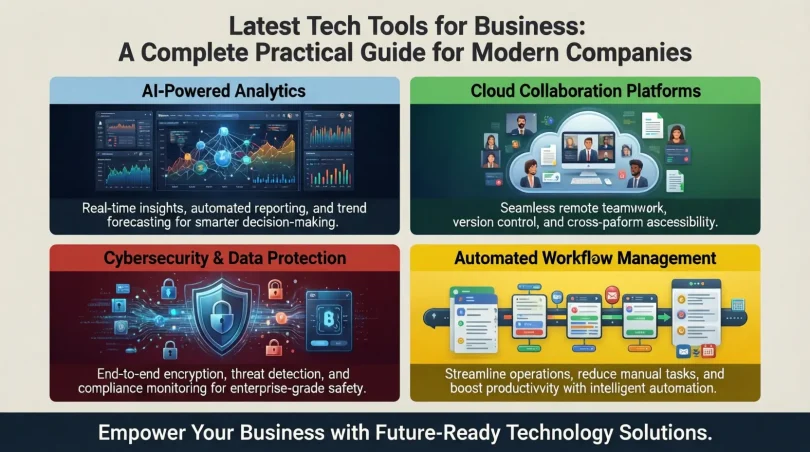
Business tech tools cover a wide range of functions. Some focus on internal processes like accounting, inventory, and human resources. Others help with external activities such as marketing, sales, and customer support. There are also tools that protect business data and ensure secure access to systems.
The key feature of modern business tools is integration. Many tools can connect with each other, allowing data to flow smoothly across departments. This creates a unified system where teams can work together without confusion or delays.
Another important aspect is accessibility. Most latest tools are cloud-based, meaning they can be used from anywhere with an internet connection. This flexibility supports remote work and global teams. In short, these tools act as the digital backbone of modern businesses.
Why Is Latest Tech Tools for Business Important?

The importance of latest tech tools for business cannot be ignored in a competitive market. Businesses that rely only on manual methods often struggle to keep up with changing customer expectations and industry standards.
First, technology increases efficiency. Automated tools reduce human errors and save valuable time. Tasks that once took hours can now be completed in minutes. This allows employees to focus on more meaningful work.
Second, modern tools improve decision-making. With real-time data and reports, managers can analyze performance and identify problems quickly. Better data leads to better strategies and stronger results.
Third, customer satisfaction improves with the right tools. Fast communication, personalized marketing, and quick support create a positive experience. Happy customers are more likely to return and recommend the business to others.
Finally, technology supports scalability. As a business grows, tools can be upgraded or expanded without major disruption. This makes long-term growth more manageable and cost-effective.
Detailed Step-by-Step Guide
Step 1: Identify Business Needs
Start by understanding your business goals and challenges. List the areas where you face delays, errors, or high costs. This clarity helps you choose tools that solve real problems instead of adding complexity.
Step 2: Research Available Tools
Explore different latest tech tools for business based on your needs. Compare features, pricing, and user reviews. Focus on tools that are easy to use and offer reliable support.
Step 3: Test Before Full Adoption
Most tools offer trial versions. Use these trials to test functionality and compatibility with your existing systems. Involve your team and collect feedback during this phase.
Step 4: Plan Implementation
Create a clear implementation plan. Decide who will manage the tool, how data will be migrated, and how employees will be trained. Proper planning reduces resistance and confusion.
Step 5: Train Your Team
Provide simple training sessions and guides. Make sure employees understand how the tool helps them. Good training increases adoption and productivity.
Step 6: Monitor and Improve
After implementation, monitor performance regularly. Check if the tool meets expectations and improves results. Make adjustments when needed to get maximum value.
Benefits of Latest Tech Tools for Business
- Improved productivity through automation
- Better communication and collaboration
- Accurate data and real-time insights
- Cost savings over time
- Enhanced customer experience
- Stronger data security
- Easy scalability for growing businesses
Disadvantages / Risks
- High initial setup costs
- Learning curve for employees
- Overdependence on technology
- Data privacy and security concerns
- Integration challenges with old systems
Common Mistakes to Avoid
Many businesses make mistakes when adopting latest tech tools for business. One common error is choosing tools without clear goals. This leads to wasted money and poor results. Another mistake is ignoring employee training, which reduces tool effectiveness.
Some businesses also try to use too many tools at once. This creates confusion and lowers productivity. It is better to start small and expand gradually. Finally, ignoring security measures can expose sensitive data to risks. Always prioritize safety and compliance.
FAQs
What are the most common latest tech tools for business?
Common tools include project management software, accounting systems, customer relationship platforms, marketing automation tools, and cybersecurity solutions. Each serves a specific purpose.
Are these tools suitable for small businesses?
Yes, many tools are designed for small businesses with affordable pricing and simple features. They help small teams work efficiently without large investments.
How often should businesses update their tools?
Businesses should review tools annually. Updates depend on growth, changing needs, and new technology trends.
Do these tools require technical knowledge?
Most modern tools are user-friendly. Basic training is usually enough for daily use. Advanced features may require extra learning.
Can these tools replace human workers?
These tools support employees but do not replace them. They handle repetitive tasks while humans focus on creativity and strategy.
How can businesses ensure tool security?
Use strong passwords, enable access controls, and update software regularly. Choosing reputable tools also reduces security risks.
Expert Tips & Bonus Points
Always align technology with business strategy. Focus on tools that provide measurable value. Encourage feedback from users and stay updated with trends. Remember, technology should simplify work, not complicate it.
Conclusion
In conclusion, latest tech tools for business are essential for success in the modern business environment. They help companies work smarter, respond faster, and grow sustainably. By automating tasks, improving communication, and providing valuable insights, these tools create a strong foundation for long-term success.
However, technology alone is not enough. Businesses must choose tools carefully, implement them properly, and train employees effectively. Avoiding common mistakes and focusing on real needs ensures better results.
As technology continues to evolve, businesses that adapt early gain a competitive advantage. By understanding and using the right tools, companies can build efficient operations and deliver better value to customers. Investing in smart technology today prepares your business for tomorrow’s challenges and opportunities.