
Introduction
Free programming tools are changing how people learn, practice, and grow in the world of software development. Today, you do not need expensive software or paid subscriptions to start coding. With the help of free programming tools, anyone with a computer and internet access can begin their journey into programming. These tools are designed to support beginners while also offering powerful features for intermediate users. As a result, learning to code has become more accessible than ever before.
In the past, programming was often limited to professionals who could afford costly development environments. However, free programming tools have removed that barrier. Students, freelancers, and hobby developers now use these tools to build websites, mobile apps, games, and even complex software systems. Because of this, the demand for free programming tools continues to grow worldwide.
Another important reason free programming tools matter is flexibility. Most of these tools support multiple programming languages and work on different operating systems. This allows users to experiment, practice, and improve their skills without worrying about compatibility issues. Moreover, many free programming tools are supported by large communities that provide tutorials, updates, and help.
In this detailed guide, you will learn everything about free programming tools. We will explain what they are, why they are important, how to use them step by step, and what benefits and risks they offer. By the end of this article, you will clearly understand how free programming tools can support your programming goals and help you move forward with confidence.
What is Free Programming Tools?
Free programming tools are software applications or platforms that help developers write, test, debug, and manage code without any cost. These tools are available for download or online use and do not require paid licenses. In most cases, they are open-source or freely distributed by companies and developer communities.
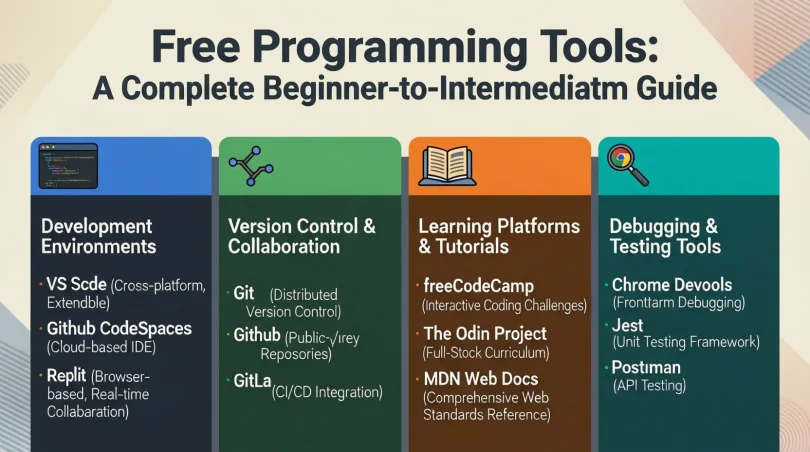
These tools can include code editors, integrated development environments, compilers, debuggers, version control systems, and testing tools. Some free programming tools focus on a single task, while others offer complete development environments. Because of this variety, users can choose tools based on their skill level and project needs.
Free programming tools are used across many programming languages such as Python, JavaScript, Java, C++, and more. They also support different types of development, including web development, mobile app development, game development, and data analysis. This wide usage makes free programming tools a key part of modern software development.
Most importantly, free programming tools allow beginners to learn without pressure. They can experiment, make mistakes, and improve their skills without financial risk. For intermediate users, these tools provide enough power and flexibility to build real-world projects.
Why is Free Programming Tools Important?

Free programming tools are important because they remove financial barriers to learning and development. Not everyone can afford paid software, especially students and self-learners. Free programming tools make programming education fair and accessible to everyone.
Another reason free programming tools are important is skill development. Many companies value practical experience more than certificates. By using free programming tools, learners can build projects, practice coding, and develop problem-solving skills. This hands-on experience is essential for career growth.
Free programming tools also encourage innovation. Developers can test ideas quickly without worrying about costs. This freedom leads to creativity and experimentation. Many successful applications and startups began using free programming tools during their early stages.
In addition, these tools often have strong community support. Users can find tutorials, forums, and documentation easily. This community-driven learning environment helps beginners overcome challenges faster. Overall, free programming tools play a vital role in shaping modern technology and education.
Detailed Step-by-Step Guide
Step 1: Identify Your Programming Goal
Before choosing free programming tools, you need to define your goal. Decide whether you want to learn web development, mobile apps, data science, or general programming. Clear goals help you select the right tools.
Step 2: Choose a Programming Language
Next, select a programming language that matches your goal. For example, Python is great for beginners and data analysis, while JavaScript is essential for web development. Many free programming tools support multiple languages.
Step 3: Select a Code Editor or IDE
A code editor or integrated development environment is essential. Free programming tools in this category offer features like syntax highlighting, auto-completion, and error detection. Choose one that feels comfortable and easy to use.
Step 4: Install Required Compilers or Interpreters
Some languages require compilers or interpreters to run code. Free programming tools usually provide easy installation guides. Make sure everything is set up correctly before coding.
Step 5: Learn Basic Features
Spend time learning the basic features of your chosen tools. Explore menus, shortcuts, and settings. Understanding these features will improve your productivity and confidence.
Step 6: Start with Simple Projects
Begin with small projects such as simple calculators, to-do lists, or basic websites. Free programming tools are perfect for practice projects that build your skills step by step.
Step 7: Use Debugging Tools
Debugging is an important part of programming. Free programming tools often include debugging features that help you find and fix errors. Learn how to use them effectively.
Step 8: Practice Version Control
Version control helps manage code changes. Many free programming tools support version control systems. This is especially useful when working on larger projects.
Step 9: Explore Advanced Features
Once you are comfortable, explore advanced features like extensions, plugins, and customization. These features can greatly enhance your development experience.
Step 10: Keep Learning and Updating
Technology changes quickly. Regularly update your free programming tools and learn new features. Continuous learning is key to success in programming.
Benefits of Free Programming Tools
- No financial cost, making learning accessible to everyone
- Suitable for beginners and intermediate users
- Support multiple programming languages
- Strong community support and documentation
- Regular updates and improvements
- Encourage practice and hands-on learning
- Flexible and customizable environments
Disadvantages / Risks
- Limited advanced features compared to paid tools
- Community support may vary in quality
- Some tools may lack professional support
- Compatibility issues with older systems
- Learning curve for complex tools
Common Mistakes to Avoid
Many beginners make the mistake of using too many free programming tools at once. This can cause confusion and slow progress. Focus on mastering one tool before moving to another.
Another common mistake is ignoring documentation. Free programming tools often come with detailed guides that explain features and usage. Skipping these resources can lead to frustration.
Some users also avoid practicing debugging. Debugging skills are essential, and free programming tools provide helpful features for this purpose. Practice regularly to improve problem-solving abilities.
Finally, relying only on tools without understanding core programming concepts is a mistake. Tools are helpful, but strong fundamentals are more important.
FAQs
What are free programming tools used for?
Free programming tools are used to write, test, debug, and manage code. They help developers build software without paying for expensive tools.
Are free programming tools suitable for beginners?
Yes, free programming tools are ideal for beginners. They offer simple interfaces, helpful features, and community support that make learning easier.
Can free programming tools be used for professional projects?
Many professionals use free programming tools for real-world projects. While some advanced features may be limited, they are often sufficient for most tasks.
Do free programming tools support multiple languages?
Most free programming tools support multiple programming languages. This allows users to learn and work with different technologies easily.
Are free programming tools safe to use?
Generally, free programming tools are safe when downloaded from official sources. Always keep them updated to avoid security issues.
How do I choose the right free programming tools?
Choose tools based on your goals, programming language, and skill level. Start simple and upgrade as your needs grow.
Expert Tips & Bonus Points
Focus on learning one tool deeply instead of trying many at once. This builds confidence and efficiency. Customize your tool settings to match your workflow for better productivity.
Join online communities related to your free programming tools. These communities offer valuable advice, tutorials, and motivation. Practice coding daily, even for short periods, to maintain consistency.
Always work on small projects before attempting large ones. This approach helps you understand concepts clearly. Finally, keep experimenting and stay curious. Free programming tools offer endless opportunities to grow.
Conclusion
Free programming tools have transformed the way people learn and practice coding. They remove financial barriers and make programming accessible to students, beginners, and intermediate developers. With the right approach, these tools can help anyone build strong technical skills and confidence.
Throughout this guide, we explored what free programming tools are, why they matter, and how to use them step by step. We also discussed their benefits, risks, common mistakes, and expert tips. This complete understanding allows you to make better choices and avoid frustration.
The key to success with free programming tools is consistency and patience. Focus on learning fundamentals, practice regularly, and use tools as support rather than shortcuts. Over time, your skills will improve naturally.
Whether you want to start a new career, improve your current skills, or explore programming as a hobby, free programming tools provide a strong foundation. Use them wisely, stay motivated, and continue learning. With dedication and the right tools, your programming journey can be both successful and rewarding.