
Introduction
In today’s digital world, online safety is no longer optional. Every day, people use the internet for work, study, shopping, and communication. Because of this heavy online activity, cyber threats are also increasing at a fast pace. Hackers, malware, phishing attacks, and data leaks are now common risks for individuals and businesses. This is where cybersecurity tools free options become very useful. These tools help protect systems, data, and personal information without adding financial pressure.
Many beginners believe cybersecurity is expensive or too technical. In reality, several powerful free tools are available that offer strong protection and easy setup. From antivirus software to network scanners, free cybersecurity tools can handle many basic and intermediate security needs. They are especially helpful for students, freelancers, startups, and small website owners.
Using cybersecurity tools free does not mean compromising on safety. Instead, it means using smart, open-source, and community-supported solutions. When used correctly, these tools can prevent attacks, detect threats early, and improve overall digital hygiene. Moreover, they help users understand how cybersecurity works in real life.
This guide explains everything in simple English. You will learn what cybersecurity tools free are, why they matter, how to use them step by step, and what mistakes to avoid. Whether you are just starting or already have some experience, this article will help you choose and use the right tools with confidence.
What is Cybersecurity Tools Free?
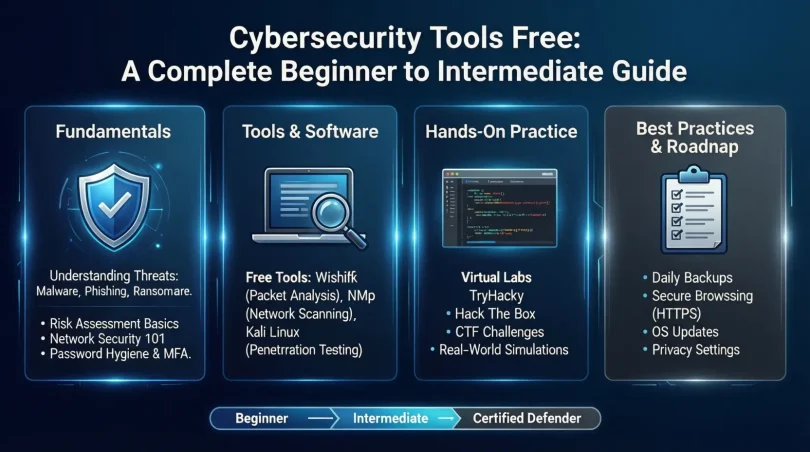
Cybersecurity tools free are software programs or platforms that help protect computers, networks, websites, and data without any cost. These tools are designed to detect, prevent, and respond to cyber threats such as viruses, spyware, ransomware, and unauthorized access.
Most free cybersecurity tools focus on core security functions. For example, free antivirus software scans files and removes malware. Free firewalls control incoming and outgoing network traffic. Password managers store and protect login credentials safely. Some tools are open-source, meaning their code is public and improved by global security experts.
Cybersecurity tools free are not only for personal users. Small businesses and developers also rely on them for basic protection. While they may not offer advanced enterprise features, they still provide strong security when configured properly.
In simple terms, these tools act as digital guards. They watch your system, alert you about dangers, and help you fix security issues before serious damage happens.
Why is Cybersecurity Tools Free Important?

Cyber threats do not target only large companies. Individuals and small websites are often easier targets. This makes cybersecurity tools free very important for everyday users.
One key reason is affordability. Not everyone can pay for premium security software. Free tools allow everyone to protect their digital life. Another reason is awareness. These tools help users understand common security risks and how attacks happen.
Free cybersecurity tools also encourage good security habits. Regular scans, strong passwords, and secure browsing become part of daily routines. Over time, this reduces the chances of data theft and system damage.
Additionally, many free tools are built by trusted communities and security experts. They are regularly updated to handle new threats. This makes them reliable and effective for basic to intermediate protection needs.
Detailed Step-by-Step Guide
Step 1: Identify Your Security Needs
Start by understanding what you want to protect. This could include personal files, email accounts, websites, or networks. Different needs require different tools.
Make a simple list of your risks. For example, malware protection, password security, or network monitoring. This clarity helps you choose the right cybersecurity tools free.
Step 2: Choose the Right Free Tools
Select tools that match your needs. Common categories include antivirus software, firewalls, password managers, and vulnerability scanners. Avoid installing too many tools at once.
Check user reviews and community support. Reliable free tools usually have active updates and clear documentation. This ensures long-term usability.
Step 3: Download from Official Sources
Always download tools from official websites or trusted platforms. This reduces the risk of fake or infected software. Never trust random download links.
After downloading, verify the file if possible. This step adds an extra layer of safety.
Step 4: Install and Configure Properly
Installation is usually simple, but configuration matters. Follow setup guides carefully. Enable automatic updates and regular scans.
Adjust settings according to your usage. For example, schedule scans during low activity hours to avoid system slowdown.
Step 5: Monitor and Maintain Regularly
Security is not a one-time task. Check reports and alerts regularly. Update tools when new versions are released.
Remove tools you no longer use. Keeping your system clean improves performance and security.
Benefits of Cybersecurity Tools Free
- No financial cost for basic protection
- Easy access for beginners and students
- Wide variety of tools for different needs
- Community-driven updates and improvements
- Helps build strong security habits
- Suitable for personal and small business use
Disadvantages / Risks
- Limited advanced features compared to paid tools
- May require manual configuration
- Support options can be limited
- Not ideal for large enterprise environments
- Some tools may show upgrade prompts
Common Mistakes to Avoid
Many users install tools but never update them. Outdated software cannot protect against new threats. Another common mistake is relying on one tool only. Security works best in layers.
Ignoring alerts is also risky. Warnings should be reviewed and acted upon quickly. Lastly, downloading tools from unofficial sources can introduce malware instead of protection.
FAQs
Are free cybersecurity tools safe to use?
Yes, most well-known free tools are safe when downloaded from official sources. Always check reviews and updates.
Can free tools replace paid cybersecurity software?
For basic and intermediate needs, free tools are often enough. Advanced business environments may need paid solutions.
Do free tools slow down systems?
Some tools may use system resources, but proper configuration reduces performance issues.
How often should I update free tools?
Enable automatic updates if available. Otherwise, check for updates at least once a week.
Are open-source tools better?
Open-source tools are transparent and community-reviewed. They are often very reliable.
Can I use multiple free tools together?
Yes, but avoid overlapping functions. Too many similar tools can cause conflicts.
Expert Tips & Bonus Points
Combine different types of cybersecurity tools free for layered protection. Use strong passwords and enable two-factor authentication wherever possible. Regularly back up important data to avoid loss during attacks.
Stay informed about new threats by following security news. Knowledge is one of the strongest security tools.
Conclusion
Cybersecurity is no longer a luxury. It is a basic necessity in a connected world. Cybersecurity tools free provide a powerful starting point for protecting digital assets without spending money. They help users stay safe, learn security basics, and build confidence online.
By choosing the right tools, setting them up correctly, and maintaining them regularly, anyone can reduce cyber risks significantly. These tools are especially valuable for beginners and intermediate users who want reliable protection without complexity.
Free does not mean weak. Many cybersecurity tools free are trusted worldwide and used daily by millions. When combined with smart habits and awareness, they create a strong defense against common cyber threats. Start today, stay alert, and make digital safety a regular part of your online life.