
Introduction
In today’s digital world, design has become an essential skill for businesses, students, creators, and marketers. From social media posts to websites, presentations, and mobile apps, good design helps ideas look clear, attractive, and trustworthy. This is why many people now search for the best design tools online to create professional visuals without needing advanced technical skills. Online design tools make it possible to design from anywhere, anytime, using only a browser and internet connection.
The biggest advantage of using the best design tools online is accessibility. You do not need expensive hardware or complex software installations. Most tools work directly in your browser and offer simple drag-and-drop features. Beginners can start quickly, while intermediate users can explore advanced options like layers, templates, and collaboration features. As a result, online design platforms are now widely used by freelancers, small businesses, teachers, students, and content creators.
Another reason these tools are growing fast is teamwork. Many online platforms allow real-time collaboration, making it easy for teams to work together on the same project. Updates appear instantly, which saves time and avoids confusion. In addition, cloud storage ensures that designs are saved safely and can be accessed from different devices.
This article will explain everything you need to know about the best design tools online. You will learn what they are, why they matter, how to use them step by step, and how to avoid common mistakes. By the end, you will feel confident choosing and using the right online design tool for your needs.
What is Best Design Tools Online?
The term best design tools online refers to web-based software platforms that help users create visual content directly through an internet browser. These tools are designed to simplify the design process by offering ready-made templates, easy editing options, and cloud-based storage. Unlike traditional desktop software, online design tools do not require installation or powerful computers.
Online design tools are used for many purposes, including graphic design, UI and UX design, logo creation, social media graphics, posters, presentations, and more. They often include features like drag-and-drop elements, customizable fonts, icons, images, and color palettes. This makes them suitable for beginners who have little design experience.
Another key feature is accessibility. Because these tools run online, users can access their projects from any device. Many platforms also support collaboration, allowing multiple users to work on the same design in real time. This makes the best design tools online a practical choice for individuals and teams alike.
Why is Best Design Tools Online Important?

The importance of the best design tools online lies in how they make design simple, fast, and affordable. In the past, design work required expensive software and trained professionals. Today, online tools allow anyone to create quality designs with minimal effort.
One major reason these tools matter is time efficiency. Ready-made templates reduce the time spent starting from scratch. Users can customize layouts quickly and focus more on creativity. This is especially helpful for small businesses and content creators who work under tight deadlines.
Cost is another important factor. Many online design tools offer free plans or affordable subscriptions. This lowers the barrier for students and startups who cannot invest in costly software. Additionally, automatic updates ensure users always have access to the latest features without manual downloads.
Finally, consistency plays a big role. Online tools help maintain brand consistency by saving colors, fonts, and layouts. This ensures that all designs follow the same style, which builds trust and recognition among audiences.
Detailed Step-by-Step Guide
Step 1: Identify Your Design Needs
Before choosing from the best design tools online, you should clearly understand your purpose. Decide whether you need designs for social media, websites, presentations, or branding. Knowing your goals helps you select the right features.
Step 2: Choose the Right Tool
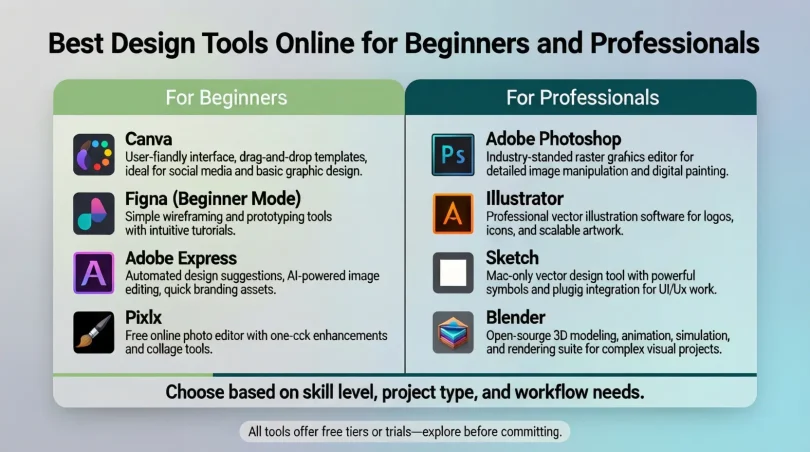
Not all tools are the same. Some focus on graphic design, while others specialize in UI and UX. Compare features, ease of use, and pricing. Beginners should look for simple interfaces and templates.
Step 3: Create an Account
Most online design tools require account registration. This allows you to save projects, access cloud storage, and collaborate with others. Sign-up is usually quick and simple.
Step 4: Explore Templates and Layouts
Templates are one of the strongest features of the best design tools online. Browse available templates related to your project. Choose one that matches your style and customize it.
Step 5: Customize Design Elements
Edit text, images, colors, and icons to match your brand or message. Use alignment tools and spacing options to keep the design clean and balanced.
Step 6: Collaborate and Get Feedback
If you work in a team, invite others to view or edit your design. Real-time collaboration helps improve quality and reduces revision time.
Step 7: Export and Share
Once your design is complete, export it in the required format. Many tools support multiple file types, making sharing easy.
Benefits of Best Design Tools Online
- Easy to use for beginners
- No installation required
- Affordable pricing options
- Access from any device
- Real-time collaboration
- Cloud-based storage
- Wide range of templates
- Quick updates and new features
Disadvantages / Risks
- Limited features in free versions
- Dependence on internet connection
- Subscription costs over time
- Learning curve for advanced tools
- Data privacy concerns
Common Mistakes to Avoid
Many users make simple mistakes when using the best design tools online. One common error is choosing the wrong tool for the job. Not every platform fits every purpose. Another mistake is overusing templates without customization, which can make designs look generic.
Ignoring alignment and spacing also reduces design quality. Beginners often add too many fonts or colors, which creates visual clutter. Lastly, forgetting to save or back up designs can lead to data loss, especially when working online.
FAQs
What are the best design tools online for beginners?
The best design tools online for beginners are those with simple interfaces, drag-and-drop features, and ready-made templates. These tools allow new users to start designing without technical skills.
Do online design tools require powerful computers?
No, most online tools work smoothly on standard devices because processing is handled in the cloud. A stable internet connection is usually enough.
Can professionals use online design tools?
Yes, many professionals use the best design tools online for quick projects, collaboration, and prototyping. Advanced features support professional workflows.
Are online design tools secure?
Most reputable platforms use encryption and cloud security measures. However, users should always review privacy settings and terms.
Can designs be used for commercial purposes?
Many tools allow commercial use, but licensing terms vary. Always check usage rights before publishing designs.
How do I choose the right design tool online?
Consider your skill level, design needs, budget, and collaboration requirements. Testing free versions can help you decide.
Expert Tips & Bonus Points
To get the most out of the best design tools online, keep your designs simple and focused. Use consistent colors and fonts to maintain visual harmony. Always preview designs before exporting to check for errors.
Another useful tip is to organize your projects into folders. This saves time and keeps your workspace clean. Learning keyboard shortcuts can also improve speed and efficiency. Finally, stay updated with new features, as online tools often release improvements that enhance productivity.
Conclusion
The rise of the best design tools online has transformed how people create visual content. These tools remove barriers that once limited design to professionals with expensive software. Today, anyone with creativity and internet access can produce high-quality designs for personal or business use. This shift has empowered beginners while also supporting intermediate users who want faster workflows and collaboration.
Online design platforms offer flexibility, affordability, and ease of use. They support teamwork, maintain consistency, and save valuable time. While there are some limitations, such as internet dependence and feature restrictions in free plans, the benefits clearly outweigh the risks for most users. By choosing the right tool and following best practices, you can avoid common mistakes and improve your design quality.
As digital content continues to grow, learning to use the best design tools online is a valuable skill. Whether you are a student, freelancer, marketer, or business owner, these tools help you communicate ideas visually and effectively. With practice and creativity, you can turn simple concepts into professional designs that stand out and leave a lasting impression.