
Introduction
Technology tools for beginners are becoming an essential part of daily life in today’s digital world. Whether you are a student, a small business owner, a freelancer, or someone who simply wants to understand modern technology, learning how to use basic tools can make life easier and more productive. Many people feel confused or even scared when they hear words like software, apps, cloud, or digital tools. However, the truth is that technology does not have to be complicated. With the right guidance and a clear starting point, anyone can learn step by step.
Technology tools for beginners are designed to simplify tasks such as communication, learning, organization, creativity, and online safety. These tools help users save time, reduce manual work, and improve accuracy. For example, instead of writing everything on paper, you can use simple apps to take notes, manage tasks, or store files safely. This makes daily work smoother and more organized.
Another reason why technology tools for beginners are important is that they help people stay connected. From email and messaging apps to video calls and collaboration platforms, technology allows users to communicate with others easily, no matter where they are. This is especially helpful for students and remote workers.
In this guide, you will learn what technology tools for beginners are, why they matter, how to start using them step by step, and what mistakes to avoid. Everything is explained in simple English, with clear examples and practical tips, so you can build confidence and skills at your own pace.
What is Technology Tools for Beginners?
Technology tools for beginners refer to simple and user-friendly digital tools that help new users perform common tasks using computers, smartphones, or tablets. These tools are created with ease of use in mind, so people with little or no technical background can understand them quickly. The main goal of these tools is to make everyday activities easier, faster, and more efficient.
Technology tools for beginners can include software applications, mobile apps, online platforms, and basic hardware tools. Examples include word processors for writing, spreadsheet tools for calculations, note-taking apps, email services, and basic design tools. These tools usually have clean interfaces, clear instructions, and helpful features that guide users step by step.
Another important aspect of technology tools for beginners is accessibility. Most of these tools work on multiple devices and do not require expensive equipment. Many of them are available for free or at a low cost, making them suitable for students and beginners. They also come with tutorials, tips, and support options to help users learn without frustration.
In simple words, technology tools for beginners are the first building blocks of digital skills. They help people move from traditional methods to digital solutions smoothly and confidently.
Why is Technology Tools for Beginners Important?

Technology tools for beginners are important because they help people adapt to a fast-changing digital environment. Today, many basic tasks depend on technology, from online learning to digital payments and remote work. Without basic tools and skills, it becomes difficult to keep up with modern demands.
One major reason technology tools for beginners matter is efficiency. These tools help users complete tasks faster and with fewer errors. For example, using a document editor instead of handwriting saves time and allows easy editing. Similarly, task management tools help people remember deadlines and stay organized.
Another important reason is skill development. Learning technology tools for beginners builds a strong foundation for advanced digital skills. Once users feel comfortable with basic tools, they can easily move on to more complex software in the future. This is especially helpful for career growth and education.
Technology tools for beginners also promote independence. Users do not have to rely on others for simple digital tasks. They can manage their own files, communicate online, and solve basic problems on their own. This builds confidence and reduces stress.
Finally, technology tools for beginners improve communication and access to information. With just a few clicks, users can connect with people, learn new things, and explore opportunities that were not easily available before.
Detailed Step-by-Step Guide
Step 1: Identify Your Needs
The first step in using technology tools for beginners is understanding your needs. Think about what tasks you want to perform. Do you want to write documents, manage time, learn online, or communicate better? Clear goals help you choose the right tools.
Make a simple list of your daily activities. For example, students may need note-taking and learning tools, while small business owners may need accounting and communication tools. This step prevents confusion and saves time.
Step 2: Choose Simple and User-Friendly Tools
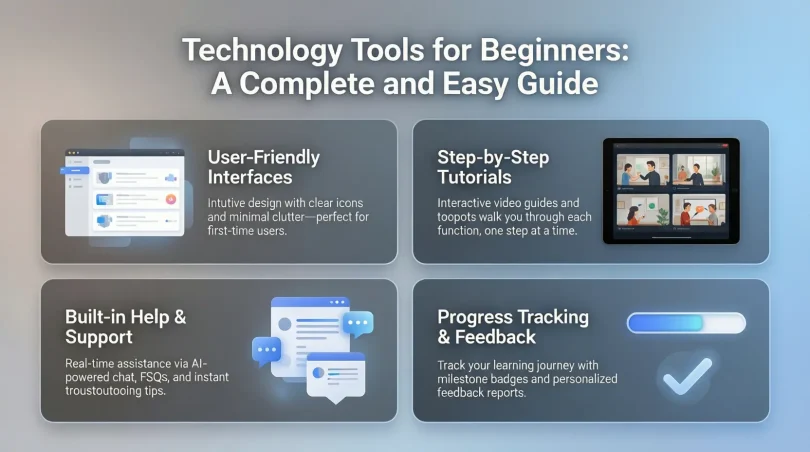
Once your needs are clear, look for tools designed specifically for beginners. Technology tools for beginners usually have simple menus, clear icons, and easy instructions. Avoid tools that look too complex at the start.
Read descriptions carefully and check screenshots if available. A tool with fewer features but better usability is often a better choice for beginners. Simplicity is key in the learning stage.
Step 3: Start with Basic Features
Do not try to learn everything at once. Technology tools for beginners are best learned step by step. Start with basic features and use them regularly. For example, if you are using a word processor, begin by typing, saving, and editing text.
As you become comfortable, slowly explore additional features. This gradual approach reduces fear and builds confidence over time.
Step 4: Use Built-In Help and Tutorials
Most technology tools for beginners offer built-in help sections, tips, or short tutorials. These resources are very useful and should not be ignored. They explain features in simple language and often include examples.
Spend some time exploring these help options. They can answer common questions and show shortcuts that save time. Learning from official guides also reduces mistakes.
Step 5: Practice Regularly
Practice is essential when learning technology tools for beginners. Try to use the tools daily, even for small tasks. Regular use helps you remember steps and understand features better.
Create small challenges for yourself, such as organizing files or creating a simple document. The more you practice, the more natural the tools will feel.
Step 6: Stay Safe and Organized
While using technology tools for beginners, it is important to focus on safety and organization. Use strong passwords, keep software updated, and avoid sharing personal information unnecessarily.
Organize your files into folders and give them clear names. Good habits at the beginning make long-term use much easier and safer.
Benefits of Technology Tools for Beginners
- Easy to learn and use with minimal technical knowledge
- Saves time and improves daily productivity
- Helps users stay organized and focused
- Builds confidence in using digital systems
- Improves communication and collaboration
- Provides access to online learning and resources
- Supports personal growth and career development
- Reduces dependency on others for basic tasks
Disadvantages / Risks
- Initial learning curve may feel confusing
- Overuse of tools can cause screen fatigue
- Data privacy risks if safety steps are ignored
- Dependence on internet connection
- Too many tools can create distraction
- Risk of choosing complex tools too early
Common Mistakes to Avoid
One common mistake beginners make is trying to learn too many tools at the same time. This often leads to confusion and frustration. It is better to focus on one or two technology tools for beginners and master them before moving on.
Another mistake is ignoring updates and security settings. Updates often improve performance and fix problems. Skipping them can lead to errors or security risks.
Many beginners also avoid asking for help or using tutorials. This slows down learning and increases mistakes. Using available support is a smart and effective way to improve skills.
Finally, some users expect instant results. Learning technology tools for beginners takes time and patience. Progress may feel slow at first, but consistency always brings improvement.
FAQs
What are the best technology tools for beginners to start with?
The best technology tools for beginners are simple tools like document editors, note-taking apps, basic email services, and task management tools. These tools cover daily needs and are easy to learn.
How long does it take to learn technology tools for beginners?
The learning time depends on practice and interest. Most beginners can understand basic features within a few days. Regular use helps improve skills faster.
Are technology tools for beginners expensive?
Many technology tools for beginners are free or offer basic versions at no cost. Paid options usually provide extra features but are not required for learning basics.
Can beginners use technology tools without technical knowledge?
Yes, technology tools for beginners are designed for users with no technical background. Clear interfaces and tutorials make learning easy.
What devices are needed to use technology tools for beginners?
Most tools work on smartphones, tablets, or computers. A basic device with internet access is usually enough to get started.
How can beginners stay safe while using technology tools?
Beginners should use strong passwords, avoid sharing personal information, and keep software updated. These simple steps improve safety.
Expert Tips & Bonus Points
Experts recommend starting slow and staying consistent when learning technology tools for beginners. Focus on understanding how a tool helps you rather than learning every feature. This practical approach builds confidence.
Another helpful tip is to keep digital work organized from the beginning. Clear folder names and regular backups save time and prevent stress later. Beginners should also explore keyboard shortcuts once they are comfortable, as these can greatly improve efficiency.
Finally, stay curious and open to learning. Technology keeps changing, and a positive mindset makes it easier to adapt and grow with new tools.
Conclusion
Technology tools for beginners play a vital role in helping people adapt to the digital world with confidence and ease. They are designed to simplify everyday tasks, improve organization, and support learning without overwhelming users. By starting with simple and user-friendly tools, beginners can slowly build essential digital skills that are useful in both personal and professional life.
The key to success with technology tools for beginners is patience and consistency. It is normal to feel unsure at the beginning, but regular practice and step-by-step learning make a big difference. Using built-in tutorials, focusing on basic features, and maintaining good digital habits help beginners progress smoothly.
As technology continues to grow, having a strong foundation becomes more important than ever. Technology tools for beginners provide that foundation by making digital systems accessible to everyone. With the right approach and mindset, anyone can use these tools to become more productive, confident, and connected in today’s digital age.