
Introduction
In today’s digital world, staying safe online has become more important than ever. Every day, people use the internet for work, learning, shopping, banking, and entertainment. While this makes life easier, it also increases the risk of cyber threats. Hackers, data thieves, malware, and online scams are growing fast. That is why using the best online security tools is no longer optional; it is a necessity for everyone.
Beginners often think online security is only for big companies or tech experts. In reality, even a simple email account or social media profile can be targeted. Intermediate users may know some basics but still miss important protection layers. The right tools help you stay safe without needing advanced technical skills. They work quietly in the background and protect your data, devices, and privacy.
The good news is that modern security tools are easy to use and affordable. Many of them are designed for normal users and come with clear instructions. From antivirus software to password managers and VPNs, each tool plays a unique role in keeping you secure. When used together, they create a strong digital shield.
This guide will explain everything in simple English. You will learn what online security tools are, why they matter, and how to use them step by step. By the end, you will feel confident choosing and using the best online security tools for your daily digital life.
What is Best Online Security Tools?
The term best online security tools refers to software and services designed to protect users from digital threats. These tools help secure personal information, online accounts, devices, and internet connections. They work by detecting, blocking, and preventing harmful activities before damage occurs.
Online security tools come in many forms. Some focus on protecting devices from viruses and malware. Others protect online privacy by hiding your location or encrypting your data. There are also tools that help manage passwords safely and monitor suspicious activity.
For beginners, these tools act like digital guards. They watch your online actions and warn you if something looks unsafe. For intermediate users, they provide deeper control and advanced protection options. The goal is the same for everyone: to stay safe, private, and stress-free online.
Using the best tools does not mean using many complicated programs. It means choosing reliable tools that work well together. A balanced setup offers strong protection without slowing down your device or confusing you.
Why is Best Online Security Tools Important?
Online threats are increasing every year. Cybercriminals target individuals because they are often less protected than companies. This makes online security tools extremely important for everyday users.
First, these tools protect your personal data. Information like passwords, photos, bank details, and emails can be stolen if left unprotected. Second, they protect your devices from malware that can damage files or spy on your activity. Third, they help you browse the internet safely by blocking dangerous websites and fake links.
Another reason is privacy. Many websites and apps track user behavior. Security tools help reduce tracking and keep your online identity private. They also help parents and students stay safe from harmful content and online scams.
Most importantly, the best online security tools save time and money. Recovering from a cyber attack can be stressful and expensive. Prevention is always easier than fixing damage after it happens.
Detailed Step-by-Step Guide
Step 1: Understand Your Security Needs
Start by identifying how you use the internet. Do you shop online, use social media, or work remotely? Knowing your habits helps you choose the right tools.
Step 2: Install Antivirus and Anti-Malware Software
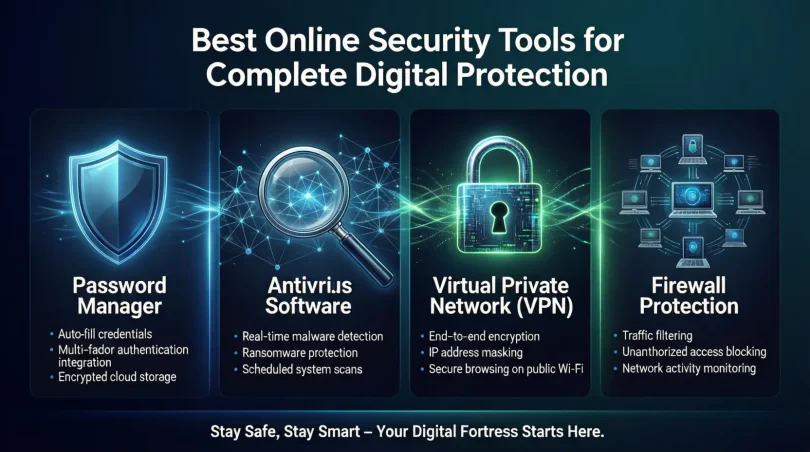
Antivirus software is the foundation of online security. It scans files, emails, and downloads to remove threats. Choose a trusted option with real-time protection.
Step 3: Use a Secure Password Manager
Password managers store and create strong passwords. They reduce the risk of account hacking by avoiding weak or repeated passwords.
Step 4: Enable a Virtual Private Network (VPN)
A VPN encrypts your internet connection. It is especially useful on public Wi-Fi networks and helps protect privacy.
Step 5: Turn On Firewalls
Firewalls control incoming and outgoing network traffic. They block unauthorized access and add another layer of defense.
Step 6: Keep Software Updated
Updates fix security weaknesses. Always update your operating system, browsers, and security tools.
Step 7: Enable Two-Factor Authentication
Two-factor authentication adds an extra step when logging in. Even if a password is stolen, accounts stay protected.
Benefits of Best Online Security Tools
- Protect personal and financial data
- Prevent viruses, malware, and ransomware
- Improve online privacy and anonymity
- Secure public Wi-Fi connections
- Reduce risk of identity theft
- Provide peace of mind
- Easy to use for beginners
- Advanced options for intermediate users
Disadvantages / Risks
- Some tools require paid subscriptions
- Free versions may have limited features
- Poor-quality tools can slow devices
- Incorrect settings may reduce protection
- Overlapping tools can cause conflicts
Common Mistakes to Avoid
Many users install security tools but still stay at risk due to simple mistakes. One common mistake is relying on only one tool. Online security works best when multiple tools are used together.
Another mistake is ignoring updates. Outdated software leaves security gaps. Using weak passwords or reusing the same password is also risky. Some users trust unknown or fake security tools, which can cause more harm.
Avoid disabling security features for convenience. Short-term ease can lead to long-term problems. Always read basic instructions and understand what each tool does.
FAQs
What are the best online security tools for beginners?
Beginners should start with antivirus software, a password manager, and a VPN. These tools are easy to use and provide strong basic protection.
Are free security tools safe to use?
Some free tools are safe but limited. They are good for basic protection. However, paid versions usually offer better features and support.
How often should security tools be updated?
Security tools should be updated automatically whenever possible. Manual checks should be done at least once a week.
Can one tool provide complete protection?
No single tool can provide complete protection. A combination of tools offers the best results.
Do security tools slow down devices?
High-quality tools are designed to run efficiently. Poor or outdated tools may slow down performance.
Is online security necessary for mobile devices?
Yes, mobile devices face many of the same threats as computers. Security tools are important for phones and tablets as well.
Expert Tips & Bonus Points
Experts recommend choosing well-known and trusted security providers. Always read user reviews and check features before installing any tool. Use simple settings at first, then explore advanced options as you learn.
Regularly review account activity and security alerts. Teach family members about safe online habits. Backup important data to secure locations. Most importantly, stay informed about new threats and updates.
Using the best online security tools is not about fear. It is about smart and responsible internet use.
Conclusion
The internet is a powerful tool, but it comes with risks that should never be ignored. Cyber threats are no longer rare events; they are part of daily online life. Whether you are a student, professional, or casual user, protecting your digital presence is essential. This is where the best online security tools make a real difference.
By using the right tools, you take control of your online safety. Antivirus software, password managers, VPNs, firewalls, and regular updates work together to create strong protection. These tools are designed to be user-friendly, making them suitable for beginners and useful for intermediate users as well.
Online security is not a one-time task. It is an ongoing habit. Simple actions like updating software, using strong passwords, and staying alert can prevent major problems. The tools discussed in this guide help reduce risks and give you confidence while using the internet.
In the end, investing time in learning and using the best online security tools is an investment in peace of mind. Stay informed, stay protected, and enjoy a safer digital experience every day.