
Introduction
In today’s digital world, staying safe online has become more critical than ever. Every day, hackers, malware, phishing scams, and identity thieves target individuals and businesses. Even simple online activities, like checking emails or shopping, can put your personal information at risk. This is where best online security tools come into play. They help you safeguard your devices, passwords, and sensitive data from threats.
Whether you are a beginner or an intermediate internet user, understanding and using the right security tools is essential. The internet is filled with countless options, which can be confusing. Some tools protect against malware, others secure your internet connection, and some manage your passwords safely. Choosing the right mix of tools can make your digital life much safer and stress-free.
In this guide, we will explore what online security tools are, why they are important, step-by-step recommendations for the best tools, their benefits, potential risks, common mistakes to avoid, and expert tips. By the end, you will be equipped with the knowledge to protect your digital life efficiently. Let’s dive in!
What is Best Online Security Tools?
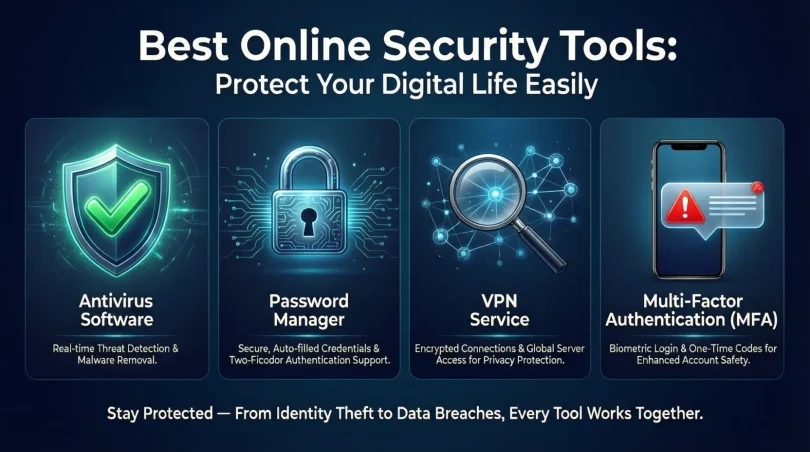
Best online security tools are software, apps, or services designed to protect your devices, online accounts, and personal data from cyber threats. These tools cover a range of protections, including:
- Antivirus software: Detects and removes viruses, malware, and spyware.
- VPNs (Virtual Private Networks): Secure your internet connection and hide your IP address.
- Password managers: Store and encrypt passwords safely.
- Firewalls: Block unauthorized access to your network.
- Anti-phishing tools: Protect you from fraudulent websites and emails.
The purpose of these tools is to prevent cyberattacks, maintain privacy, and ensure that your online activities are safe. While some tools focus on individual devices, others provide network-level protection for entire systems. Using multiple tools together can create a robust security setup for your digital life.
Why is Best Online Security Tools Important?
Using the best online security tools is no longer optional; it is essential. Here’s why:
- Protect Personal Information: Hackers can steal sensitive data like passwords, banking information, and personal files. Security tools prevent unauthorized access.
- Avoid Financial Loss: Cybercrime can cost thousands of dollars in identity theft or fraud. Security tools reduce these risks.
- Secure Online Activities: Browsing, shopping, or using social media safely requires protection from malware and phishing attacks.
- Prevent Device Damage: Malware and viruses can slow down or even damage your devices permanently.
- Peace of Mind: Knowing your online presence is secure allows you to focus on work, learning, or entertainment without constant worry.
In short, investing time and effort in using the right security tools saves you from headaches, financial loss, and privacy invasion.
Detailed Step-by-Step Guide to Using Best Online Security Tools
Step 1: Install Reliable Antivirus Software
Antivirus software is the foundation of online security. Follow these steps:
- Research trusted antivirus programs like Norton, Kaspersky, or Bitdefender.
- Download and install the software from official sources.
- Run a full system scan immediately after installation.
- Set automatic scans to run weekly to maintain protection.
Tip: Choose software that includes real-time protection to block threats before they cause damage.
Step 2: Use a VPN for Safe Browsing
A VPN (Virtual Private Network) encrypts your internet connection. Here’s how to use it:
- Select a trustworthy VPN provider such as ExpressVPN, NordVPN, or CyberGhost.
- Install the VPN app on your device.
- Connect to a server, preferably in your country or a secure location.
- Browse the internet or access public Wi-Fi without fear of hackers monitoring your activity.
Example: Using a VPN while shopping online ensures your credit card details remain secure.
Step 3: Set Up a Password Manager
Managing passwords is difficult without a proper tool. Here’s how a password manager helps:
- Download a secure password manager like LastPass, 1Password, or Dashlane.
- Create a strong master password.
- Save all your passwords within the app.
- Enable auto-fill to log in safely without reusing weak passwords.
Tip: Never reuse passwords across multiple accounts. A password manager makes this easy to avoid.
Step 4: Enable Two-Factor Authentication (2FA)
Two-factor authentication adds an extra layer of security. Steps:
- Check if your online accounts support 2FA.
- Link your account to an authenticator app like Google Authenticator or Authy.
- Every login will require your password plus a code from your phone.
Benefit: Even if your password is compromised, 2FA prevents unauthorized access.
Step 5: Install a Firewall
Firewalls protect your network from unwanted connections. How to use them:
- Most operating systems come with a built-in firewall; make sure it is enabled.
- For extra protection, consider a hardware firewall if you use multiple devices at home.
- Regularly update your firewall rules to block new threats.
Example: A firewall stops malware from communicating with hackers, keeping your data secure.
Step 6: Protect Against Phishing
Phishing attacks trick users into revealing passwords or personal information. Steps to stay safe:
- Avoid clicking unknown email links.
- Use browser plugins that detect phishing websites.
- Verify emails by checking sender addresses and suspicious attachments.
Tip: Even experienced users fall for phishing scams, so staying vigilant is essential.
Step 7: Keep Software Updated
Old software often contains security vulnerabilities. Steps:
- Enable automatic updates for your operating system.
- Update apps and browsers regularly.
- Remove outdated software that is no longer supported.
Benefit: Regular updates patch security flaws before hackers exploit them.
Benefits of Best Online Security Tools
Using best online security tools offers several advantages:
- Protects sensitive data from hackers
- Prevents financial loss and identity theft
- Safeguards devices from malware and viruses
- Maintains online privacy and anonymity
- Provides peace of mind during online activities
- Reduces risks when using public Wi-Fi
- Simplifies password management
- Enhances overall digital hygiene
Disadvantages / Risks
While online security tools are essential, they come with minor risks:
- Cost: Premium tools may be expensive.
- System Slowdown: Some antivirus or VPN apps can reduce device speed.
- False Sense of Security: Tools are helpful but cannot guarantee 100% protection.
- Complexity: Beginners may find setup and configuration confusing.
- Compatibility Issues: Some tools may not work well on older devices.
Common Mistakes to Avoid
Even with security tools, mistakes can leave you vulnerable:
- Using weak or repeated passwords
- Ignoring software updates
- Relying solely on antivirus software
- Disabling firewalls or VPNs to improve speed
- Clicking unknown links or downloading unverified files
- Sharing sensitive information online carelessly
- Not backing up data regularly
Avoiding these mistakes ensures that your online security tools work effectively.
FAQs
1. What are the best online security tools for beginners?
For beginners, the best tools are antivirus software like Norton, a VPN like NordVPN, and a password manager like LastPass. These cover essential protection without being complicated.
2. Can free online security tools be trusted?
Some free tools are safe but often have limited features. Paid tools usually offer stronger protection, real-time updates, and better customer support.
3. How does a VPN protect my privacy?
A VPN encrypts your internet connection, hides your IP address, and prevents hackers from tracking your online activities, especially on public Wi-Fi networks.
4. Is two-factor authentication necessary?
Yes, 2FA adds an extra security layer. Even if your password is stolen, unauthorized users cannot access your accounts without the secondary authentication code.
5. Can security tools slow down my device?
Some tools may use system resources, which can slightly slow down older devices. Choosing lightweight tools and adjusting settings can minimize impact.
6. How often should I update security software?
Always enable automatic updates. Manual checks should be done at least once a week to ensure you have the latest protection.
7. Are online security tools enough to stay safe?
Tools are essential but not enough alone. Safe online habits, awareness of phishing, and strong passwords are equally important.
8. What is the easiest way to manage multiple passwords securely?
Using a password manager is the easiest way. It generates, stores, and fills in strong passwords automatically.
Expert Tips & Bonus Points
- Use multiple layers of protection: Antivirus + VPN + 2FA provides stronger security than a single tool.
- Backup your data regularly: Even the best tools can’t prevent hardware failure or ransomware loss.
- Educate yourself on phishing tactics: Awareness is a free but powerful security tool.
- Choose tools with automatic updates: Ensures you are always protected against the latest threats.
- Monitor account activity: Many tools offer alerts for unusual login activity.
- Secure mobile devices too: Smartphones are often targeted; use mobile security apps.
Conclusion
In conclusion, using the best online security tools is crucial in today’s digital world. They protect your devices, personal information, and online activities from hackers, malware, and identity theft. By implementing antivirus software, VPNs, password managers, firewalls, and anti-phishing tools, you can build a secure digital environment that minimizes risks and gives peace of mind.
It is important to remember that no tool can provide 100% security. Safe online habits, regular updates, strong passwords, and awareness of online threats complement these tools effectively. Beginners can start with essential software, while intermediate users can add layers of protection for enhanced safety.
Investing in the right tools today can prevent costly mistakes tomorrow. By following the step-by-step guide, avoiding common errors, and implementing expert tips, anyone can enjoy a safer, more secure online experience. Protecting your digital life has never been easier, and with consistent effort, you can surf the internet, shop, and work online confidently.