
Programming has become a crucial skill in today’s digital world. Whether you are learning coding for the first time or improving your skills as a developer, using the right tools can make your journey faster and more efficient. Free programming tools are a great way to start without investing money upfront. They allow beginners to practice, experiment, and even build real projects. For professionals, they provide flexible solutions that save costs and enhance productivity. In this article, we will explore everything you need to know about free programming tools, their benefits, risks, common mistakes, and expert tips to make the most out of them.
If you are looking to learn programming, develop software, or explore coding as a hobby, free programming tools can become your best friend. They cover a wide range of purposes such as code editing, debugging, version control, and learning new programming languages. By choosing the right tools, you can improve your efficiency, write better code, and even collaborate with other developers easily. In this guide, we will introduce you to the most popular free programming tools, explain why they are essential, provide step-by-step guidance on using them, and give tips to avoid common pitfalls. By the end, you will feel confident in selecting and using free programming tools effectively.
What is Free Programming Tools?
Free programming tools are software applications or online platforms that assist developers in writing, testing, and managing code without any cost. They cover a wide range of purposes including:
- Code Editors – Tools for writing and formatting code.
- Integrated Development Environments (IDEs) – Full-featured platforms for coding, debugging, and running programs.
- Version Control Systems – Tools to manage and track changes in code.
- Debugging Tools – Applications that help find and fix errors in code.
- Learning Platforms – Websites or apps that teach programming languages and concepts interactively.
The main advantage of these tools is that they provide the functionality of premium software without requiring payment. For beginners, they offer a low-risk way to practice coding. For experienced programmers, they can increase productivity and streamline development workflows. Free programming tools are designed to be user-friendly, easy to install, and compatible with multiple programming languages like Python, Java, C++, JavaScript, and more.
Why is Free Programming Tools Important?
Free programming tools play a critical role in the development journey. Here’s why they matter:
- Cost-Effective Learning – Beginners can start coding without paying for expensive software.
- Skill Development – Practicing with professional tools helps improve coding skills.
- Efficiency and Productivity – Many free tools come with features that speed up coding and debugging.
- Collaboration – Tools like version control systems allow multiple developers to work on the same project easily.
- Access to Open Source Communities – Free tools often connect developers to large communities for learning and support.
- Experimentation – Developers can test new languages, frameworks, and techniques without financial risk.
By using free programming tools, developers can focus more on learning and building projects rather than worrying about costs. They also provide opportunities to stay updated with modern programming trends and technologies.
Detailed Step-by-Step Guide to Using Free Programming Tools
Step 1: Choose the Right Tool
Start by identifying your needs. Are you learning a new language, building a web app, or debugging code? Here are some popular options:
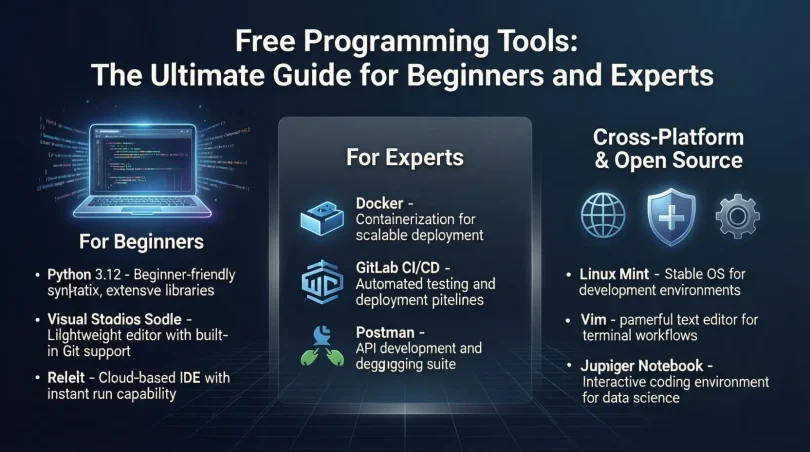
- Visual Studio Code (VS Code) – Lightweight and versatile code editor. Supports extensions for almost every language.
- Eclipse IDE – Ideal for Java developers. Provides powerful debugging and project management features.
- PyCharm Community Edition – Best for Python beginners. Includes intelligent code assistance.
- Git – Version control system for tracking code changes and collaborating with others.
- Repl.it – Online platform for coding in multiple languages without installation.
Step 2: Installation and Setup
- Download the Tool – Visit the official website of the tool and download the free version.
- Install – Follow the installation instructions carefully.
- Configure Settings – Set preferences like themes, font size, and language support.
- Install Extensions (Optional) – Many tools allow adding plugins to improve functionality.
Example: In VS Code, you can install Python or JavaScript extensions to get autocomplete, linting, and debugging features.
Step 3: Start Coding
- Open your IDE or code editor.
- Create a new project or file.
- Write simple code to test if the setup works.
Example: If using Python in PyCharm, write a “Hello World” program to ensure the interpreter is correctly configured.
Step 4: Debugging and Testing
- Use built-in debuggers to identify errors.
- Run your code multiple times to ensure it works as expected.
- Add print statements or logging for easier tracking.
Step 5: Version Control
- Initialize Git in your project folder.
- Commit changes frequently with meaningful messages.
- Push your code to platforms like GitHub to save backups and collaborate with others.
Step 6: Continuous Learning
- Explore tutorials and forums related to your tool.
- Experiment with new features and extensions.
- Join developer communities to stay updated and get support.
Benefits of Free Programming Tools
Using free programming tools comes with several advantages:
- Cost Savings – No need to buy expensive software.
- Flexibility – Tools are compatible with multiple programming languages.
- Accessibility – Many tools are cross-platform (Windows, Mac, Linux).
- Learning Opportunity – Beginners can explore without financial pressure.
- Collaboration – Easy integration with version control systems.
- Community Support – Large user communities provide tutorials, tips, and troubleshooting help.
- Regular Updates – Popular free tools often receive frequent updates to improve functionality.
Disadvantages / Risks
Even though free programming tools are useful, there are some risks and limitations:
- Limited Features – Free versions may lack advanced functionalities.
- Ads and Promotions – Some free tools display ads or promotions.
- Learning Curve – Beginners may find some tools overwhelming.
- Compatibility Issues – Not all free tools work with every operating system or programming language.
- Security Concerns – Open-source tools may have vulnerabilities if not updated regularly.
- Lack of Official Support – Free tools may have limited customer support.
Common Mistakes to Avoid
- Ignoring Documentation – Many beginners skip reading guides and miss important features.
- Overloading with Extensions – Installing too many plugins can slow down performance.
- Neglecting Version Control – Not using Git can cause loss of code or collaboration issues.
- Skipping Backups – Always back up your projects to avoid data loss.
- Not Testing Regularly – Running code only at the end increases debugging complexity.
- Choosing the Wrong Tool – Pick a tool that matches your programming language and skill level.
FAQs
1. Are free programming tools suitable for beginners?
Yes, free programming tools are perfect for beginners as they allow learning without financial risk. Many provide tutorials and beginner-friendly features.
2. Can professionals use free tools for serious projects?
Absolutely. Many developers and startups rely on free tools like VS Code, Eclipse, and GitHub for real-world projects.
3. Are free tools safe to use?
Most reputable free tools are safe. Always download from official websites and keep software updated to avoid security risks.
4. Do free tools support multiple programming languages?
Many free tools, like VS Code and Repl.it, support multiple languages including Python, Java, JavaScript, C++, and more.
5. Can I collaborate with others using free tools?
Yes, tools like Git and GitHub make collaboration easy, even for beginners. You can track changes and work on projects with multiple developers.
6. Are there online alternatives to free programming tools?
Yes, platforms like Repl.it, CodePen, and JSFiddle allow you to code online without installation, which is ideal for experimentation and learning.
7. How do I choose the best free programming tool?
Consider your goals, programming language, required features, and ease of use. Start with one tool and explore extensions as needed.
8. Can free tools replace paid IDEs?
In many cases, yes. Popular free IDEs offer features similar to paid versions, making them suitable for most coding projects.
Expert Tips & Bonus Points
- Customize Your Workspace – Adjust themes, shortcuts, and extensions to suit your workflow.
- Regular Practice – Use free tools daily to improve coding speed and efficiency.
- Join Communities – Forums like Stack Overflow or Reddit help solve problems and share knowledge.
- Experiment with Languages – Try coding in multiple languages to broaden your skill set.
- Use Shortcuts – Learning IDE shortcuts saves time and increases productivity.
- Keep Learning – Follow tutorials, blogs, and courses to explore advanced features.
Bonus: Many free tools offer integrations with cloud services, which allow you to test and deploy applications online for free. This is especially helpful for web developers and those learning DevOps concepts.
Conclusion
Free programming tools are an essential resource for anyone looking to learn or enhance coding skills. They provide cost-effective access to professional-grade software, improve productivity, and allow experimentation without financial risk. Whether you are a beginner exploring your first programming language or an experienced developer managing complex projects, free tools like VS Code, Eclipse, PyCharm, and Git can become invaluable assets.
While free tools come with some limitations and risks, choosing the right tool, learning its features, and following best practices can significantly enhance your programming journey. Always stay updated, back up your projects, and actively engage with developer communities to get the most out of these tools. By mastering free programming tools, you not only save money but also build a strong foundation for your future in software development and technology innovation. Start exploring today, and turn coding from a challenge into an exciting and rewarding experience.