
Introduction
Learning to code can feel confusing at first, especially when you do not know which tools to use. The internet is full of options, and beginners often feel lost while choosing the right software. This is why understanding the best coding tools for beginners is very important before starting your programming journey. The right tools make learning easier, faster, and more enjoyable. They help you write clean code, fix errors, and understand how programming really works.
For beginners and intermediate learners, coding tools act like learning partners. They guide you step by step and reduce frustration. Instead of struggling with complex setups, you can focus on learning logic and problem solving. Many successful programmers started with simple tools and gradually moved to advanced ones. Choosing beginner-friendly tools builds confidence and creates a strong foundation.
In this guide, you will learn everything about the best coding tools for beginners, explained in simple English. You will discover what coding tools are, why they matter, and how to use them step by step. This article also covers benefits, risks, common mistakes, and expert tips to help you make smart decisions. Whether you want to build websites, apps, or software, this guide will help you choose the right tools and start coding with clarity and confidence.
What is Best Coding Tools for Beginners?
The best coding tools for beginners are software programs or platforms that help new learners write, test, and understand code easily. These tools are designed with simple interfaces, helpful features, and clear instructions. They reduce technical barriers so beginners can focus on learning programming concepts instead of dealing with complex settings.
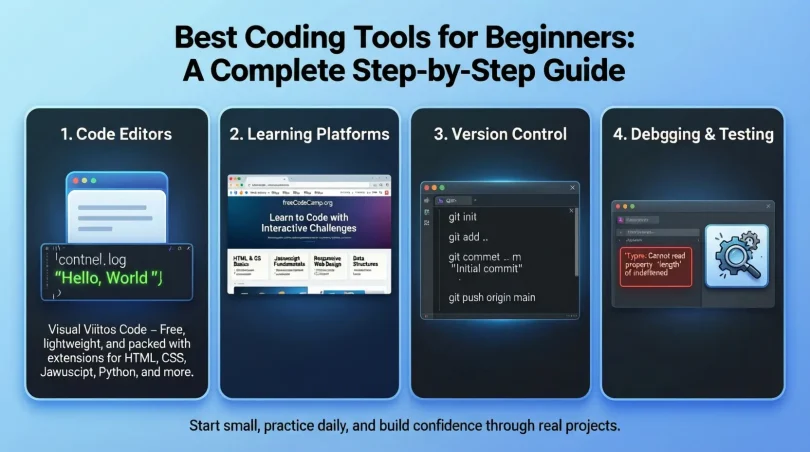
Coding tools include code editors, integrated development environments, debuggers, compilers, and learning platforms. For beginners, tools usually combine several features in one place. This makes coding smoother and less stressful. For example, a beginner-friendly code editor highlights mistakes, suggests corrections, and formats code automatically.
These tools also support multiple programming languages. This allows beginners to explore different languages like Python, JavaScript, or Java without switching tools often. Most importantly, beginner coding tools encourage practice. They provide instant feedback, which helps learners improve quickly and understand their errors clearly.
In simple terms, coding tools are your workspace for programming. Choosing the right ones can make the difference between enjoying coding or giving up early.
Why is Best Coding Tools for Beginners Important?

Using the best coding tools for beginners is important because they shape how you learn and grow as a programmer. Good tools make coding less intimidating and more approachable.
First, beginner-friendly tools reduce errors. They show mistakes clearly and explain them in simple terms. This helps learners fix problems faster and learn from them. Second, these tools save time. Instead of spending hours setting up software, beginners can start coding within minutes.
Another reason is motivation. Easy tools create a smooth learning experience. When beginners see quick results, they feel encouraged to continue. Poor tools can cause frustration and lead to quitting early.
Finally, the right coding tools build strong habits. They teach clean coding practices and proper structure from the beginning. This foundation is very helpful when moving to advanced programming later.
Detailed Step-by-Step Guide
Step 1: Identify Your Learning Goal
Before choosing tools, decide what you want to learn.
- Web development
- Mobile app development
- Game development
- Data analysis
Clear goals help you select the most suitable beginner tools.
Step 2: Choose a Beginner-Friendly Code Editor
A good code editor is essential. Look for features like:
- Simple interface
- Syntax highlighting
- Auto-completion
These features make coding easier to read and write.
Step 3: Select a Programming Language
Some languages are easier for beginners.
- Python for general programming
- JavaScript for web development
- Java for object-oriented learning
Your tool should support your chosen language smoothly.
Step 4: Use Integrated Development Environments
IDEs combine editing, debugging, and running code.
- All-in-one workspace
- Error detection
- Project management
IDEs are helpful once you understand basics.
Step 5: Practice with Built-in Debugging Tools
Debugging tools help find and fix errors.
- Step through code
- View error messages
- Understand logic flow
This improves problem-solving skills.
Step 6: Learn Version Control Basics
Version control tracks code changes.
- Saves progress
- Prevents data loss
- Helps teamwork
Beginner tools often simplify this process.
Step 7: Use Learning-Friendly Platforms
Some tools include tutorials and examples.
- Interactive lessons
- Sample projects
- Practice exercises
These features speed up learning.
Step 8: Keep Tools Updated
Updated tools offer better performance and security.
- New features
- Bug fixes
- Improved stability
Regular updates keep your workflow smooth.
Benefits of Best Coding Tools for Beginners
- Easy to learn and use
- Reduces coding errors
- Saves time and effort
- Improves learning speed
- Builds confidence
- Encourages regular practice
- Supports multiple languages
- Helps develop good coding habits
Disadvantages / Risks
- Over-reliance on auto features
- Limited advanced customization
- May hide complex concepts
- Switching tools later can be challenging
- Some tools may slow performance
Common Mistakes to Avoid
Many beginners make mistakes when choosing coding tools. One common mistake is using advanced tools too early. Complex tools can overwhelm beginners and reduce motivation.
Another mistake is changing tools frequently. This prevents deep learning and creates confusion. Beginners should stick to one or two tools until they feel comfortable.
Ignoring documentation is also a problem. Many tools offer guides that explain features clearly. Skipping these resources slows learning.
Lastly, beginners often focus only on tools and ignore practice. Tools support learning, but consistent practice builds real skills.
FAQs
What are the best coding tools for beginners?
The best coding tools for beginners are those that are simple, supportive, and easy to understand. They usually include beginner-friendly editors, basic IDEs, and tools with clear error messages.
Can beginners learn coding without tools?
Coding without tools is very difficult for beginners. Tools provide structure, guidance, and feedback, which are essential during early learning stages.
Are free coding tools good for beginners?
Yes, many free tools are excellent for beginners. They offer enough features to learn coding without financial pressure.
How many tools should a beginner use?
Beginners should start with one main coding tool and one learning platform. Too many tools can cause confusion and slow progress.
Do coding tools work for all programming languages?
Most beginner tools support multiple languages. However, some tools are better suited for specific languages, so choose wisely.
When should beginners switch to advanced tools?
Beginners should switch tools only after understanding core concepts. This usually happens after consistent practice and basic project experience.
Expert Tips & Bonus Points
Experts recommend starting simple. Choose tools that feel comfortable and do not overwhelm you. Focus on understanding logic rather than relying on tool suggestions.
Practice daily, even for short periods. Consistency matters more than long sessions. Use tools that track progress and highlight mistakes clearly.
Explore tool settings gradually. Do not try to learn everything at once. Small improvements add up over time.
Finally, remember that tools support learning, but your mindset matters most. Stay patient, curious, and open to learning.
Conclusion
Choosing the best coding tools for beginners is a critical step in your programming journey. The right tools make learning smooth, enjoyable, and effective. They reduce confusion, save time, and help beginners understand complex ideas easily. With beginner-friendly tools, learners can focus on logic, creativity, and problem solving instead of technical difficulties.
This guide explained what coding tools are, why they matter, and how to choose them step by step. It also covered benefits, risks, mistakes, and expert advice to help you make informed choices. Remember, tools are only helpers. Your dedication and practice determine success.
Start with simple tools, practice regularly, and grow at your own pace. As your skills improve, your tools can evolve with you. With the right approach and the best coding tools for beginners, anyone can learn coding and build a successful future in technology.